Blog / Knee & Joint
Keep Moving Comfortably Through DeLand’s Rainy Season
September 17, 2026
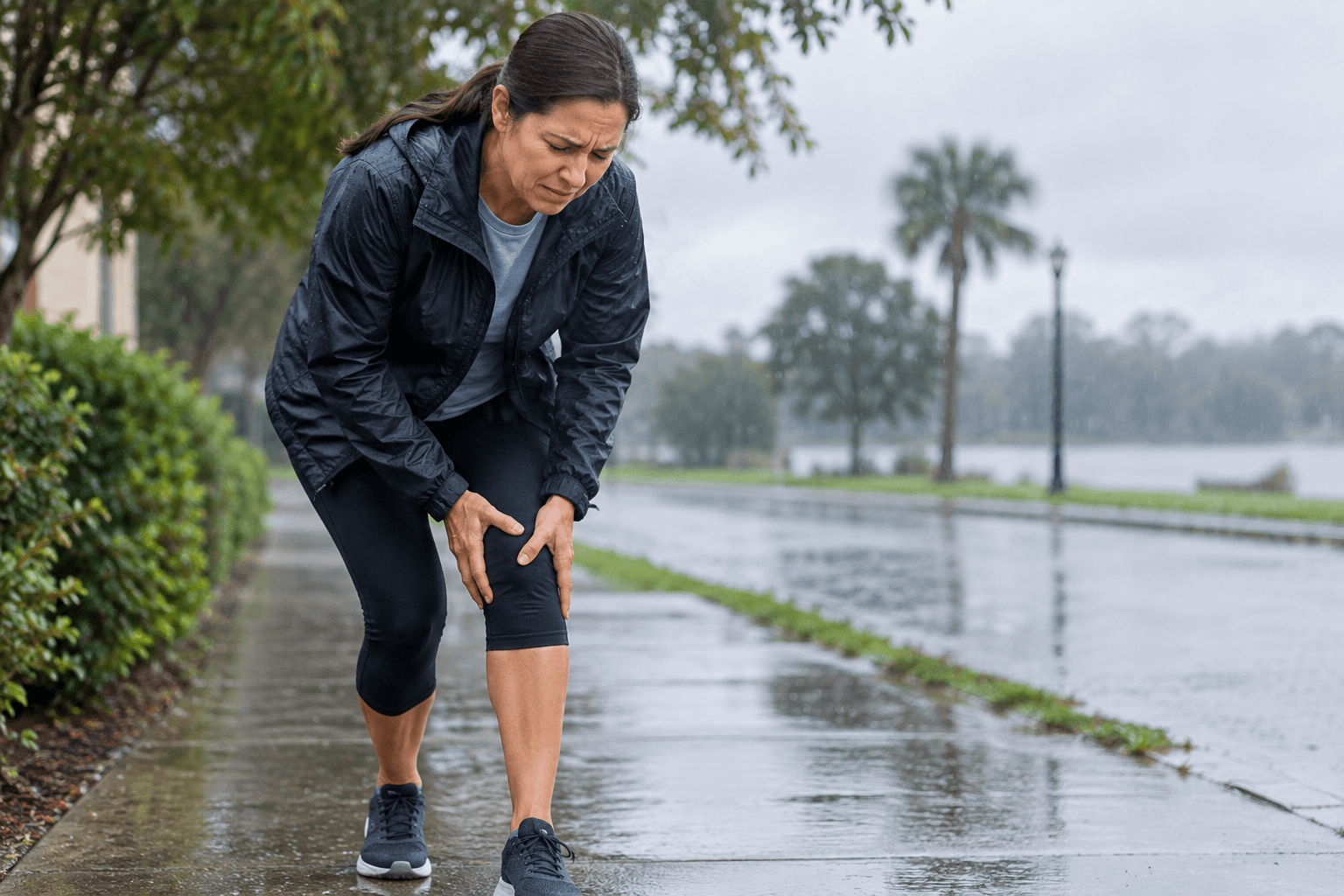
September is still part of Central Florida’s rainy season, and frequent showers, humidity, and shifting barometric pressure can make a sensitive knee feel more noticeable. We often hear from people who notice extra stiffness, aching, or less confidence when walking during wet weather, especially when arthritis, an old injury, overuse, or joint wear is already part of the picture.
Rain does not necessarily create a new knee problem or cause joint damage. Still, weather changes may amplify symptoms in a knee that is already under stress. We want you to know what may be behind those flare-ups, when symptoms need more attention, and how a personalized, non-surgical approach may support more comfortable movement.
What Weather Changes May Do to Sensitive Knees
A drop in barometric pressure is often discussed when rainy-day joint pain comes up. Research on weather-related pain is mixed, but some people with arthritis, prior injuries, or ongoing inflammation report more pressure, stiffness, or aching before and during rainy conditions. Not everyone experiences this pattern, and weather sensitivity is not a guarantee that something new is wrong.
Daily habits can also change when storms roll in. If rain keeps you indoors, you may sit longer, skip your usual walk, or move less than normal. That reduced movement can leave the muscles around the knee feeling tighter and the joint less mobile. Air-conditioned indoor spaces may also make stiffness more noticeable, even during Florida’s late-summer weather.
Rainy-day discomfort can show up alongside many common knee concerns, including:
- Osteoarthritis and joint degeneration
- Meniscus irritation or past knee injuries
- Tendon or muscle strain from repetitive activity
- Ligament-related instability
- Weakness in the muscles that support the hips, thighs, and knees
We encourage you to view rainy-day pain as a possible sign that the knee needs attention, not as proof that rain is the only cause. Keeping track of flare-ups, activity levels, swelling, and weather conditions can reveal patterns worth bringing to a qualified provider.
Tell Rain-Related Aches From Urgent Knee Symptoms
A mild weather-related flare may include stiffness after resting, a dull ache around the knee, or mild swelling that settles with reduced activity. Some people feel better after gentle movement gets the joint moving again. Even so, we do not recommend pushing through sharp or worsening pain simply because you think the weather is to blame.
Certain symptoms deserve prompt medical evaluation and should not be managed with home care alone. Pay close attention to:
- An inability to bear weight on the leg
- Sudden or severe swelling, deformity, or intense pain
- Redness or warmth around the knee along with fever
- A knee that locks, repeatedly buckles, or will not fully move
- Numbness, calf swelling, or pain after a significant fall or twist
When knee pain returns each rainy season or begins affecting work, sleep, errands, exercise, or travel, a professional assessment can be helpful. For people seeking knee pain treatment in DeLand, an evaluation may help identify whether joint wear, soft-tissue irritation, movement imbalance, or another factor is contributing to recurring discomfort.
Build a Rainy-Season Routine That Supports Mobility
Staying active does not have to mean forcing yourself through a long outdoor walk in the rain. On days when outdoor activity is less appealing, we may suggest discussing low-impact indoor options with your provider. Gentle indoor walking, stationary cycling, chair-based movement, light stretching, and approved strength exercises can help support the muscles around the knees.
A few everyday habits may also make movement feel more manageable:
- Start activities slowly rather than jumping into a demanding task
- Avoid sitting in one position for long stretches
- Choose supportive shoes with reliable traction
- Use handrails and slow down on wet surfaces
- Skip unsupportive flip-flops when knee stability is a concern
Symptom-aware pacing matters. A flare-up does not always mean complete inactivity, but it may mean adjusting the length, intensity, or type of movement you choose that day. We can help you consider a plan that respects your symptoms while supporting regular, comfortable movement through rainy weather and into the fall months.
Explore Non-Surgical Knee Pain Treatment in DeLand
When knee discomfort continues beyond an occasional rainy-day ache, individualized care can help us look beyond the weather. A proper evaluation may include a closer look at mobility, joint function, muscle balance, posture, gait, old injuries, and the activities that place demands on your knees. This gives us a fuller view of what may be contributing to pain or reduced function.
Based on your condition, health history, examination findings, and goals, we may discuss supportive options available through our clinic. These may include chiropractic care, shockwave therapy, laser therapy, compression therapy, or other approaches that fit your needs. Recommendations are always personal, because no two knees, routines, or health histories are exactly alike.
Our focus is on non-surgical, drug-free care for people who want to stay active without simply waiting for symptoms to worsen. Depending on the situation, care may focus on reducing irritation, supporting soft tissues, improving circulation, and helping you move with greater ease.
Take the Next Step Toward More Comfortable Movement
Rainy DeLand days may make a sensitive knee feel worse, but recurring stiffness, swelling, instability, or activity limits should not become an accepted part of everyday life. A thorough evaluation can help you better understand your symptoms and discuss non-surgical care options that fit your mobility goals.
Pay attention to what your knee is telling you, especially if discomfort continues after the weather improves. Tracking patterns and seeking professional guidance when symptoms keep returning can help you make informed choices about staying active with greater comfort and confidence.
Find Relief With Personalized Knee Care
At Ormond Spine and Nerve Center, we evaluate the factors contributing to your discomfort and create care plans tailored to your needs. Learn how knee pain treatment in DeLand may help you move more comfortably through changing conditions. When you are ready to discuss your symptoms and options, contact us to request an appointment.
Ready to take the next step?
Learn more about Knee Pain Treatment or request your appointment today.